Resilient Clearwater: Smarter Buildings
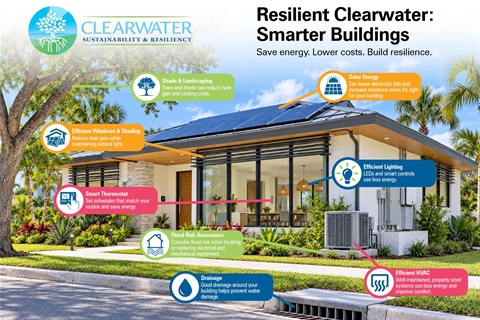
Buildings have a big impact on energy use, monthly costs, comfort and resilience. Small improvements in how a building is operated, maintained and upgraded can reduce energy use, lower utility bills and help it perform better over time.
Clearwater is applying many of these same principles in the new Clearwater City Hall, which incorporates energy-efficient systems, solar energy and other high-performance building features. Learn more about the new Clearwater City Hall.
Whether you own a home, manage a business or care for a community building, there are practical ways to make your building smarter and reduce unnecessary operating costs.
Save Energy Every Day
Simple operational changes can improve building performance with little or no upfront cost.
- Adjust thermostat schedules to match when spaces are occupied
- Maintain heating and cooling systems regularly so they operate efficiently
- Replace or clean HVAC filters as recommended
- Use LED lighting and take advantage of natural daylight
- Use timers, occupancy sensors or other controls where appropriate
- Turn off lighting and equipment when not in use
- Review utility bills over time to understand energy use and identify changes
Small savings can add up over time. In larger buildings, even minor efficiency improvements can have a greater financial impact because they are multiplied across more space, equipment and operating hours.
Keep Your Building Comfortable
A building that keeps heat outside and conditioned air inside can be more comfortable while requiring less energy.
- Seal air leaks around windows, doors and other openings
- Maintain weatherstripping and door seals
- Improve building insulation
- Check ductwork for leaks or damaged insulation
- Use shades, awnings, trees or other strategies to reduce direct sunlight
- Consider energy performance when replacing roofing, windows or other building components
Reducing heat gain can help cooling systems work more efficiently, which may lower energy costs while improving comfort.
Make Smart Upgrades
Equipment replacement and renovation projects are opportunities to improve efficiency and reduce long-term operating costs.
When planning an upgrade:
- Compare both the purchase price and expected operating costs
- Consider energy-efficient heating and cooling systems, appliances and equipment
- Make sure new HVAC equipment is properly sized for the building
- Consider efficient water heating options
- Include energy efficiency when planning renovations or major repairs
- Look for available rebates, incentives or financing programs that may help offset project costs
A lower purchase price does not always mean a lower overall cost. Considering energy use, maintenance and expected lifespan can help identify upgrades that provide better value over time.
Use Florida's Climate to Your Advantage
Building design and landscaping can help reduce heat and energy use.
- Shade windows and walls that receive strong afternoon sun
- Use trees and landscaping to provide shade where appropriate
- Consider reflective or energy-efficient roofing when replacing a roof
- Use daylight to reduce the need for artificial lighting
- Consider solar energy where it is appropriate
- Design renovations with Florida's heat, humidity and rainfall in mind
Reducing the amount of heat entering a building can lower cooling demand and help manage energy costs during the hottest months of the year.
Build for Resilience
Many building improvements can support both everyday efficiency and long-term resilience.
- Keep roofs, windows, doors and exterior building components well maintained
- Consider flood risk when locating or replacing electrical and mechanical equipment
- Maintain drainage around buildings
- Identify critical equipment that may need backup power during outages
- Consider solar energy and battery storage where appropriate
- Incorporate resilience improvements into planned renovations and repairs
Making resilience improvements as part of routine maintenance and planned projects can help spread costs over time and may reduce the expense of emergency repairs later.